
6 min read
Winter driving in Slovenia: the dates the rules change, and what they cost you
Winter equipment becomes compulsory in Slovenia on 15 November, in Austria on 1 November and in Croatia on 15 November — with different tread depths and different triggers. What that means if you were going to hire a car.
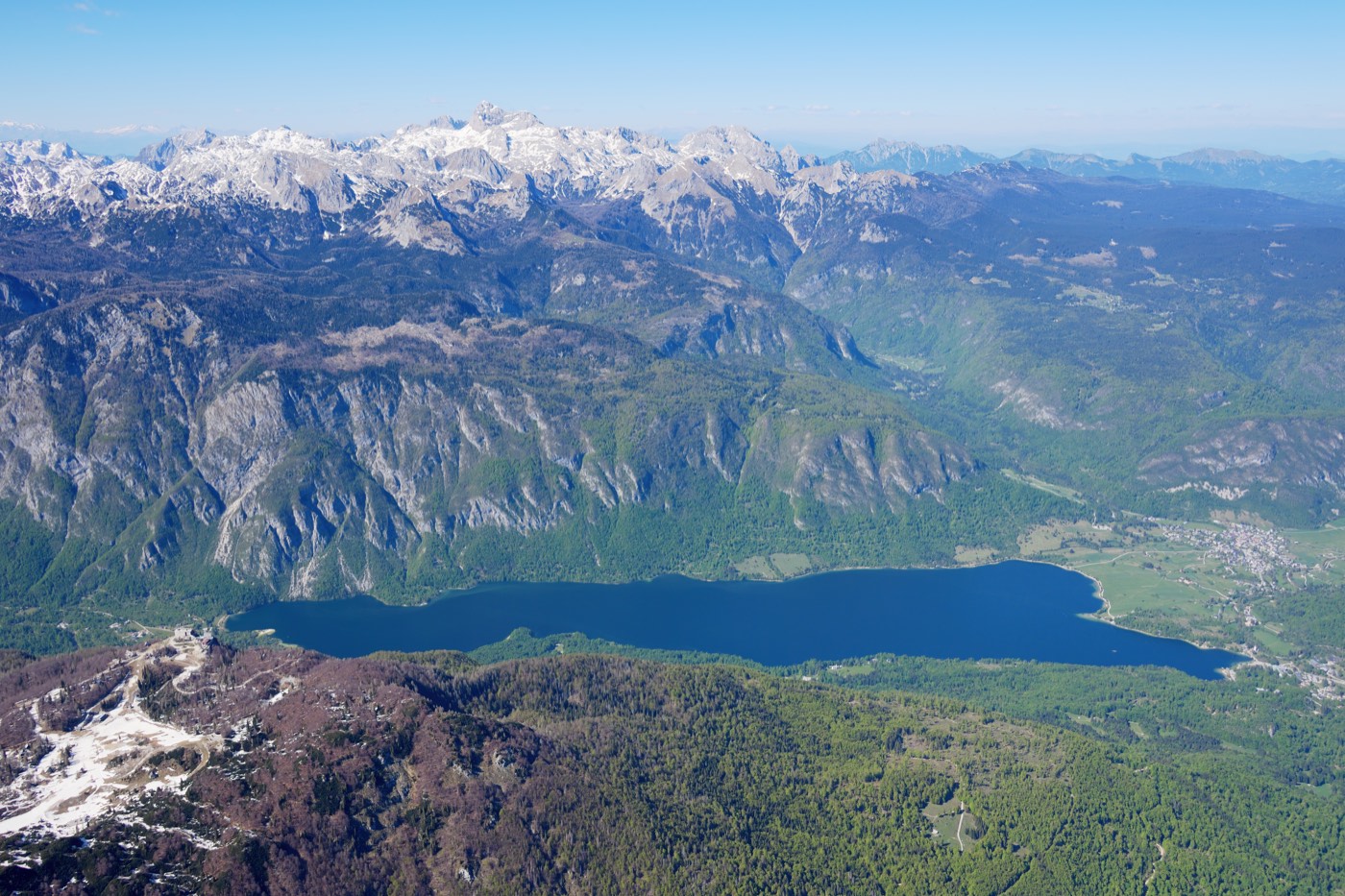
On 15 November a switch is thrown in Slovenia: winter equipment stops being sensible and becomes compulsory, whatever the weather is doing that morning. The date matters more than people expect, because a normal day out of Ljubljana crosses two borders and each country has written its own rule.
If you are hiring a car this winter, these are the four sets of rules you are agreeing to keep. If you are not, they are our problem rather than yours, and the rest of this is simply what changes on the ground between November and March.
Slovenia: 15 November to 15 March, weather or not
Compulsory for every car under 3.5 tonnes, regardless of conditions, and also outside those dates whenever winter conditions actually exist. You satisfy it one of two ways: winter tyres on all four wheels with at least 3 mm of tread, or summer tyres with at least 3 mm plus snow chains in the boot that fit the driven wheels.
Note the tread figure. The legal minimum for a summer tyre is lower, so a car that is perfectly legal in July can be illegal in December on the same rubber. The fine is 40 EUR, which is not the problem. The problem is the 500 EUR version, which applies if you block the road because you could not get up it.
Austria: 1 November to 15 April, if conditions require
A fortnight earlier than Slovenia and a month later at the far end, but worded differently: it applies when wintry conditions are present rather than by calendar alone. In practice, on any road you would take towards Klagenfurt, Salzburg or Vienna between those dates, assume it applies.
The tread requirement is higher than Slovenia's: 4 mm for radial winter tyres. A hire car collected in Ljubljana on 3 mm tyres is legal where you picked it up and short of the mark an hour later over the Karawanken tunnel.
Croatia: 15 November to 15 April, mandatory
Four winter tyres, or summer tyres with at least 4 mm of tread and chains in the boot. Same shape as the Slovenian rule, longer season, deeper tread. Worth knowing on the way to Zagreb airport, which is the route this catches most often.
Italy: no national rule, and one that matters anyway
There is no countrywide requirement. But individual roads impose their own, and the one to know is the A22 Brenner corridor and South Tyrol generally, where winter tyres are usually required from 15 November to 15 April whether or not there is snow on the ground. Trieste and Venice, the two Italian runs we drive most, are not affected by that.
What this adds up to for a hire car
- Ask what is actually fitted, not whether the car is "winter ready". The answer you want is four winter tyres and the tread depth.
- If the answer is summer tyres and chains, check the chains are in the car and that they fit the driven wheels. They are frequently neither.
- A Slovenian hire car meeting the Slovenian 3 mm is below the Austrian and Croatian 4 mm. Crossing a border does not change your tyres.
- Fitting chains for the first time, in the dark, on a slope, in snow, is a genuinely unpleasant twenty minutes. Practise in the car park or do not plan to need them.
None of this is an argument that you should not hire a car. It is an argument for knowing what you are signing, because the rental desk is not going to walk you through four countries' tread depths at eleven at night.
What else closes or changes
- The Vršič pass shuts, roughly November to May. The way into the Soča valley is then round through Tarvisio and over Predel, which adds about half an hour.
- The Vintgar Gorge closes for the season, roughly November to March, for safety rather than for lack of visitors.
- The Postojna Cave stays open all year at a constant 10 degrees, which is why so many winter days end up there.
- The coast is at its quietest, and Piran in January is a different and better town than Piran in August.
- Brnik gets fog rather than snow. Flights divert to Zagreb, Venice or Klagenfurt more often than people expect, and that is a thing to have a plan for rather than to discover at the carousel.
What we do about it
Keep the car legal in every country it drives through for the whole season. That is the operator's obligation, not the passenger's, and it is the part of winter driving you are actually handing over when you book a transfer rather than a rental.
The tariff has no winter rate. A transfer in January costs what the same transfer costs in July, the only time-based adjustment being the 10% for pickups between 23:00 and 05:00, which applies the year round. If a flight diverts, the pickup moves with it.
And the honest version, as ever: for a week based in Ljubljana with day trips, a car you have to park, de-ice and keep legal across three borders is the expensive way to do it. For a fortnight ranging across the country on your own schedule, it is not, and winter tyres are simply part of the price of that.
Need a car for this trip?
Fixed price agreed before you travel, tolls and parking included, and the owner behind the wheel.
Get a price