
7 min read
Beyond Bled and Postojna: six Slovenia day trips most visitors miss
A deer park and a chocolate-making monastery, a UNESCO mercury mine, Europe's largest herders' settlement, a 90-metre waterfall, the original stud farm for the white horses, and a medieval town nobody flies in for. All a day trip from Ljubljana.
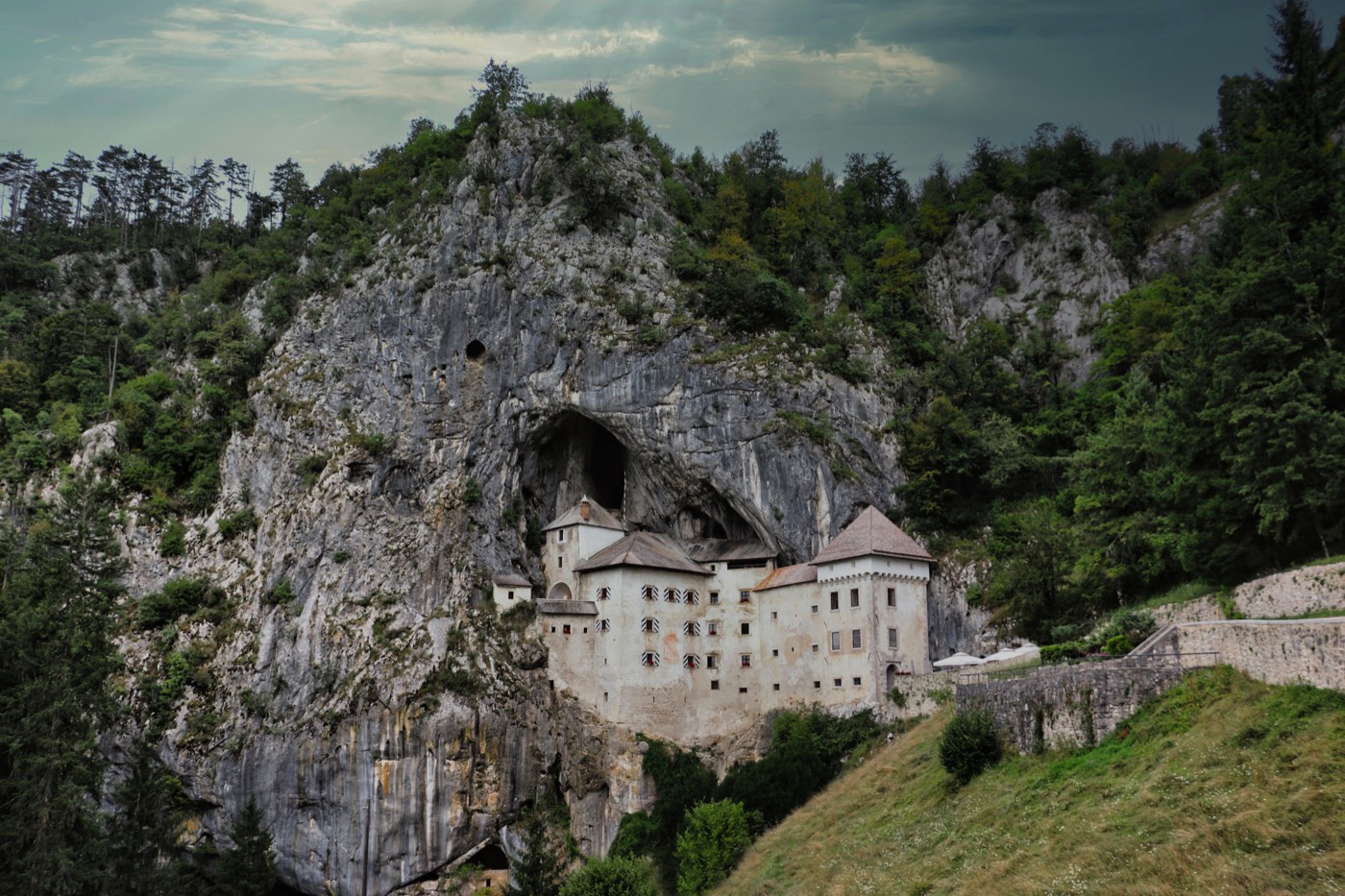
Bled and Postojna earn the attention — one is genuinely one of Europe's prettiest lakes, the other a genuinely enormous cave. But they are also the two names every list of "top things to do in Slovenia" leads with, which means they are the two places you are least likely to have the moment to yourself. Six other day trips, each built around one real thing rather than a checklist.
Olimje: a monastery, a chocolate shop and a herd of deer you can feed
Podčetrtek, in the Kozjansko hills near the Croatian border, is built around a thermal spa (Terme Olimia), but the actual reason to go is the village of Olimje next door. The Minorite monastery there keeps one of the oldest working pharmacies in Europe, still arranged with its original cabinets, and the monks run a chocolate shop beside it — Čokoladnica Olimje — where you can watch the chocolate being made and taste it.
A short drive on is Jelenov Greben, a farmstead with a free-roaming herd of around a hundred deer and mouflon that come to be fed by hand, and a rustic restaurant serving venison and mushroom dishes alongside them. The Haler homestead, nearby, has been home-brewing its own beer for more than twenty years, drawn from water under the same hill that feeds the spa. Three stops, none of them more than ten minutes from the last, and none of them something you would plan a special trip for individually — together they are a full day.
Idrija: the UNESCO mine, and the lace that came after it
Idrija was Europe's second-largest mercury mine for four centuries, and Anthony's Main Road — the mine's oldest entrance, opened in 1500 — is now an underground museum you walk straight into. The lace came later, taught to miners' wives and daughters from the 1690s as a way to earn money the mine itself never offered them, and it is still made by hand, still taught at a dedicated school, and recognised by UNESCO as part of the country's living heritage rather than a museum piece.
Both halves are a few minutes apart in the same small town, so a single stop covers the mine and the lace museum, rather than two trips to two different places.
Škofja Loka: the medieval town that isn't on the coach route
First recorded in 973, Škofja Loka's old town is one of the best-preserved medieval centres in this part of Europe, and because it sits twenty minutes from Ljubljana rather than on the way to anywhere else, it stays a town people live and work in rather than a stage set. Every few years — not every year, so check before you plan around it — the town stages its Passion Play, a centuries-old outdoor performance recognised by UNESCO as intangible heritage, the oldest surviving drama written in Slovenian.
Velika Planina: Europe's largest herders' settlement, by cable car
A plateau above Kamnik where herders have grazed cattle and lived in round-roofed wooden huts for centuries — still the largest settlement of its kind in Europe, and still in seasonal use rather than preserved as a museum village. The cable car up from Kamniška Bistrica is itself the longest in Europe without a supporting pylon, and from the top station a short chairlift finishes the climb to the huts and the view.
Logarska Dolina: a 90-metre waterfall at the end of an Alpine valley
A seven-kilometre glacial valley in the Kamnik–Savinja Alps, protected as a landscape park for exactly the reason it is worth the drive: the Rinka waterfall, falling 90 metres into a natural amphitheatre below a viewpoint called the Eagle's Nest. The valley itself is an easy, mostly flat walk in; the waterfall is the destination, not an afterthought on the way to one.
Lipica: where the white horses actually come from
Founded in 1580 by an Austrian archduke, Lipica is the original stud farm of the Lipizzaner breed — the same horses performing in Vienna's Spanish Riding School trace back to stock bred on this one estate, which is still breeding them today across more than 300 hectares. Recognised by UNESCO in 2022 alongside the breeding tradition itself, not just the place.
Distance, drive and fare from Ljubljana
| From Ljubljana to | Distance | Drive | From |
|---|---|---|---|
| Škofja Loka | 25 km | 25 minutes | €45 |
| Velika Planina | 40 km | 45 minutes | €55 |
| Idrija | 60 km | 1 h 05 min | €75 |
| Lipica | 85 km | 1 h 15 min | €100 |
| Logarska Dolina | 90 km | 1 h 15 min | €105 |
| Terme Olimia | 116 km | 1 h 40 min | €130 |
Škofja Loka is barely a trip at all — twenty-five minutes, worth combining with something else in the same half-day. Terme Olimia, for the Olimje stops, is the furthest at 116 km and the one most worth building a whole day around rather than adding to another stop.
What to pair them with
- Škofja Loka with Kranj or a morning in Ljubljana — it is too close to be the whole day on its own.
- Velika Planina with Kamnik's old town at the bottom of the cable car.
- Idrija with the Vipava valley or Postojna, both roughly the same direction out of Ljubljana.
- Lipica with Škocjan Caves or the coast — Lipica sits on the way to both.
- Olimje and Logarska Dolina are each worth the day on their own; neither is really on the way to anywhere else.
Day hire suits all six better than a point-to-point transfer, since the point is usually two or three of these in one day rather than one address and back. Tell us the shape of the day and we will say which of them fit in it.
Need a car for this trip?
Fixed price agreed before you travel, tolls and parking included, and the owner behind the wheel.
Get a price